I started this project because I believe that small actions can create big change—and I’ve seen through my mom how access to clean water and opportunities for women can transform entire communities.
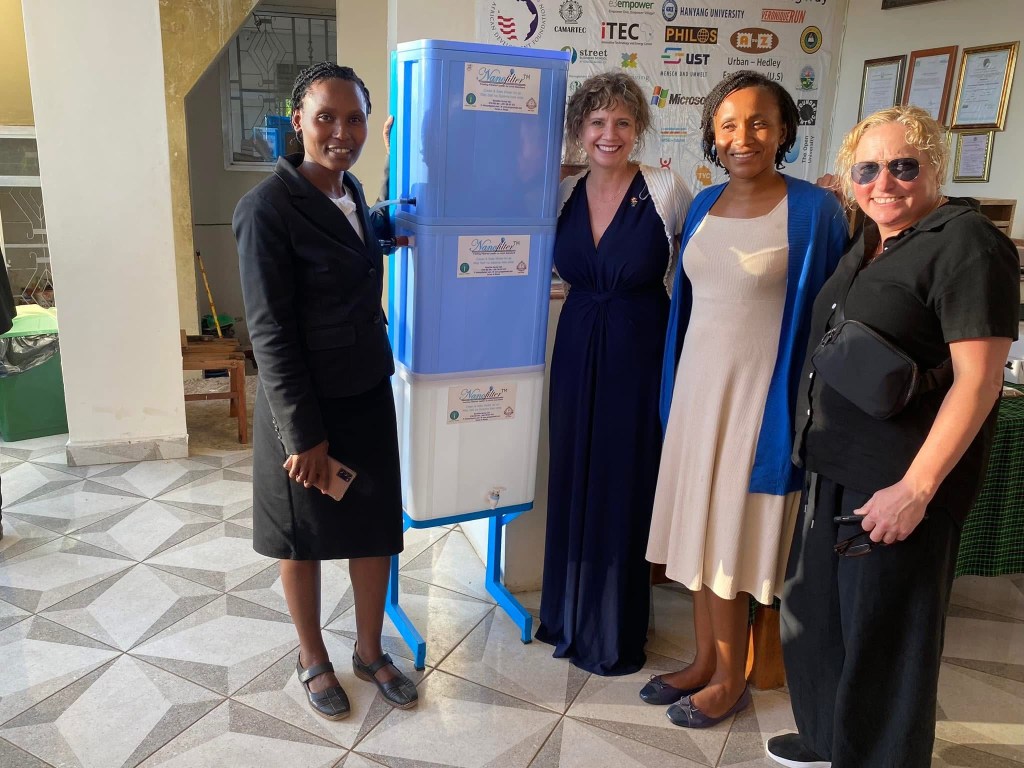
Recently, I had the privilege of interviewing Ruth Lukwaro, the CEO of Gongali Model and co-creator of the NanoFilter technology in Tanzania.
Ruth’s story is powerful. She and her husband, Professor Askwar Hilonga, grew up in villages where basic necessities like clean water and education were not guaranteed. Despite countless obstacles, they pursued education and eventually created the NanoFilter, a simple, electricity-free water purification system that’s tailored to the needs of each community.
“We didn’t want to just enjoy our success—we wanted to lift others with us,” Ruth told me.
Lifting others is what this project is all about.
The Nanofilter is now being used in homes, schools, and community water centers across Tanzania. It’s safe, affordable, and effective—removing contaminants like lead and fluoride from local water sources. It’s even been approved by the World Health Organization.
What makes it truly special is how it empowers women. Each water center is run by a local female entrepreneur. Ruth and her team train and support these women to become leaders in their communities—many of them starting with zero income and now running thriving businesses. One woman (who was part of the Happiness Project with my mom and her team), Neema, went from being unemployed to earning over 3 million Tanzanian shillings per month ($1500 CDN), employing three other women, and changing lives.
These women are selected not only because they need a job, but because they care deeply about serving their communities. Ruth said something I’ll never forget: “We look for someone who will give an elderly woman water, even if she doesn’t have money.”
The difference these centers make is visible:
- In Arusha, Tanzania, diarrheal diseases dropped by 42% after Nanofilter centers were introduced.
- Children drink more water—because it’s safe and available—leading to better health and fewer school absences.
- Women and girls no longer need to walk for hours each day just to collect water, freeing them to study, work, and dream.
- Elderly and diabetic individuals now have access to water that supports their health and dignity.
This isn’t charity—it’s sustainability, empowerment, and hope.
With the Happiness Run for Clean Water and Gender Equality, I’m raising funds to sponsor a new Nanofilter Water Center in Tanzania. Our goal is to place it in a community where school children and orphanages will directly benefit—giving them a future full of possibilities, not limitations.
I may just be a student, but what I’ve been learning from this project is that passion and purpose don’t have to wait. Ruth’s advice to young changemakers like me was simple but powerful: “Do what you’re passionate about. Don’t wait. Involve others. It will grow bigger than you imagined.”
That’s what I’m doing with this run. I hope you’ll join me—by running, donating, or sharing this story.
Together, we can turn clean water and opportunity into reality.
Run with me. Run for water. Run for women. Run for change. Run for change.
You can view my interview with Ruth here:
 Happiness Run for Clean Water and Gender Equality
Leave a comment